A full-face helmet is the most complete option if you're looking for protection and safety on the road: it covers the entire head, improves stability in the wind, and offers better protection in the event of an impact. At MT Helmets you'll find full-face helmets designed in Spain and manufactured to our own standards, with current ECE 22.06 homologation and certifications for a safer ride, without giving up comfort, fit or good performance in your everyday riding.
Full-face motorcycle helmets: total protection and aerodynamics for the road
On the road, a full-face helmet stands out for its complete coverage (including the chin) and its aerodynamics: it helps improve stability at sustained speed and reduces wind fatigue. In addition, the shell + EPS + padding combination is designed to manage impact energy, provided the helmet is properly fitted and the strap is correctly fastened.
It's also worth paying attention to three features that shape the real riding experience:
- Visor: field of view, sealing, and ease of use.
- Ventilation: a good intake/exhaust system reduces heat and moisture.
- Fit: if it moves around, it won't protect properly; if it presses on one spot, it won't be comfortable on long rides.
Full-face helmets for every riding style
On this page you'll find models like the KRE + S, Thunder 4 SV, Jarama SV, Braker SV, Stinger 2, and Targo S. The important thing is to identify which type of helmet best matches your riding and your style.
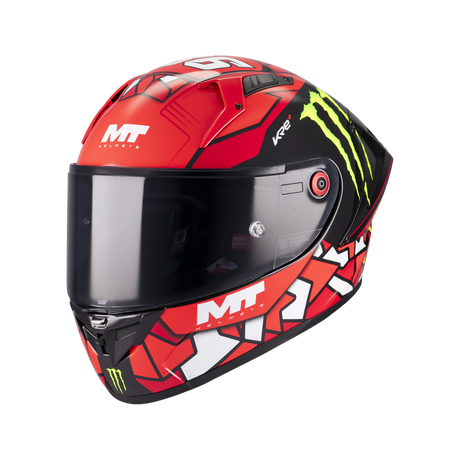
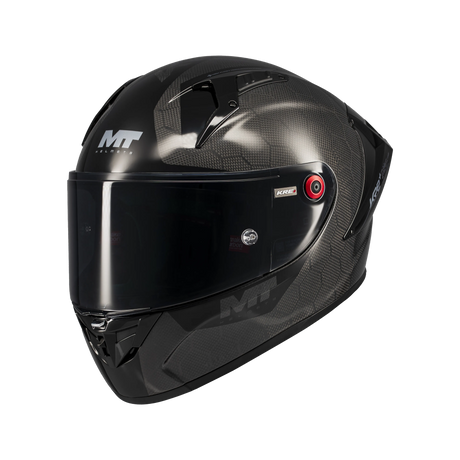
- KRE + S: a good fit if you're looking for a lighter full-face helmet with a sporty focus, for a fast pace and quick roads.
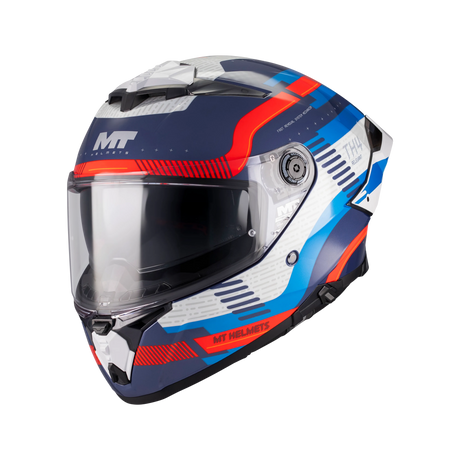
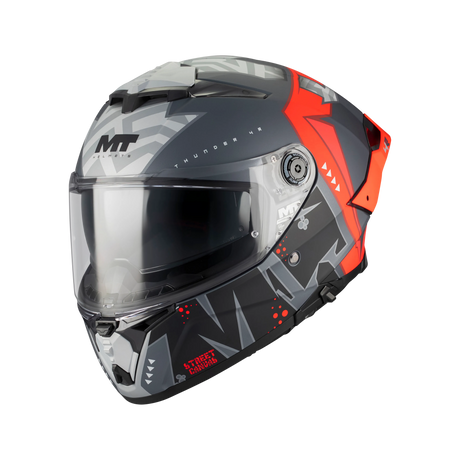
- Thunder 4 SV: a good choice if you switch between city, country roads, and motorways and want a balance between comfort and performance.
- Jarama SV: ideal if you like a classic/retro style but prefer the coverage of a full-face helmet for the road.
- Braker SV: designed for those who prioritize a sporty feel and aerodynamic stability on dynamic routes.
- Stinger 2: a great fit if you want a versatile full-face helmet for daily use and weekend getaways.
- Targo S: recommended if you're looking for a practical, affordable, and comfortable helmet for hassle-free daily riding.
Buy your full-face helmet and ride comfortably on every route
You can buy any of the models mentioned directly from MT Helmets. On our official website you'll find the full catalog of MT full-face helmets (finishes like matte, different designs and real stock by size), with clear information on features, ECE 22.06 homologation and certifications. That way you can choose with confidence, compare models with clear criteria, and get a quality helmet.


 ACCESORIOS INC.
 ACCESORIOS INC.
 PINLOCK INC.
 PINLOCK INC.
 PINLOCK INC.
 PINLOCK INC.
 PINLOCK INC.
 PINLOCK INC.
 PINLOCK INC.
 PINLOCK INC.
 PINLOCK INC.
 PINLOCK INC.