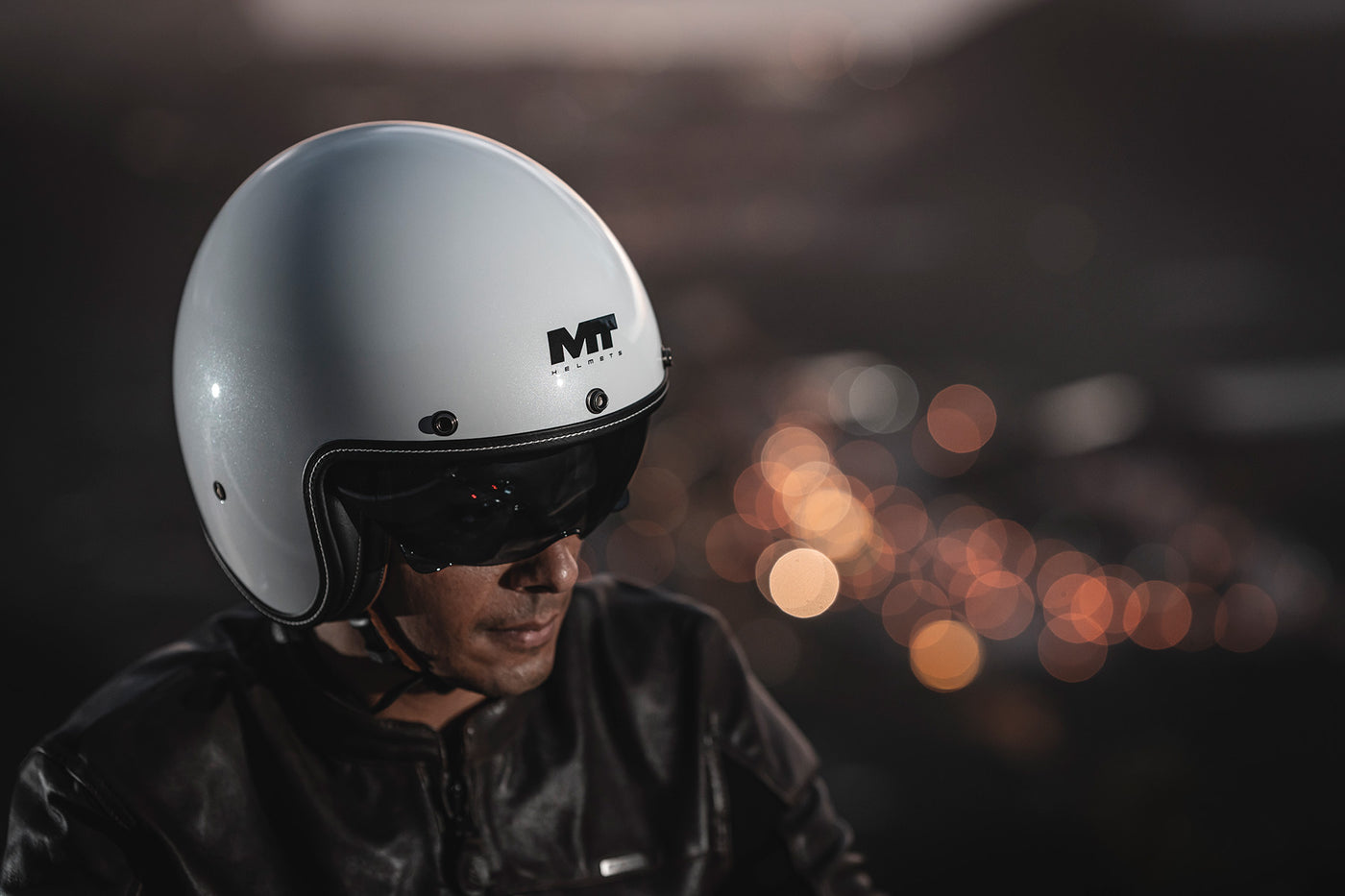
For many riders, a jet helmet is the purest way to experience motorcycling: the feeling of fresh air on your face, a wide field of vision, and the lightweight comfort that's ideal for city riding and relaxed journeys. At MT Helmets, we offer a range of open-face helmets designed for everyday use, whether you're commuting on a scooter or enjoying scenic secondary roads, always keeping the most important priority in mind: safety.
Jet motorcycle helmets: open-face, lightweight, and with maximum visibility
The greatest advantage of a jet helmet is visibility. Without a fixed chin bar, your peripheral vision remains much clearer. This becomes especially noticeable in urban traffic, at junctions, roundabouts, and during low-speed manoeuvres, where a wide field of view helps you anticipate what's happening around you.
Weight is another key benefit. A jet helmet is generally lighter than a full-face helmet, helping to reduce neck fatigue during daily commutes, errands, and repeated short journeys. In summer, the natural airflow and ventilation provide a level of comfort that many riders consider unbeatable for their motorcycle or scooter.
Within this category, you'll find several options depending on how you ride:
- Classic jet helmet with a short visor or no visor at all, ideal if you prioritise lightweight construction and timeless styling.
- Jet helmet with a long visor, designed to provide greater wind protection at higher speeds while shielding you from insects and road debris.
- Jet helmet with an integrated sun visor, particularly practical when frequently moving between bright sunlight and shade, such as in city streets, tree-lined roads, or during sunset rides.
If you're unsure which model suits you best, consider two things: how much time you spend riding at medium or higher speeds, and how important wind protection is to you. From there, the choice of visor and integrated sun visor can make all the difference.
Features and certification of MT Helmets jet helmets
With an open-face helmet, the details matter even more because you're naturally more exposed to your surroundings. At MT Helmets, we focus on the features that make a jet helmet genuinely comfortable in everyday use.
- Visor and shield: A quality visor should provide clear vision and a secure seal. On models with a long visor, the goal is to improve aerodynamic protection and reduce direct wind turbulence to the face. If you choose a jet helmet without a visor, you'll generally pair it with riding glasses, especially when riding a motorcycle.
- Integrated sun visor (selected models): Perfect for adapting quickly to changing light conditions without relying on sunglasses.
- Interior lining: A good interior offers more than softness—it helps manage moisture and is easy to maintain. Removable and washable liners extend the helmet's lifespan while keeping it fresh.
- Retention system: For urban riding, you'll want a fastening system that's quick to use, easy to adjust, and secure. Always check the final fit with the strap fully fastened.
- Shell and EPS liner: The outer shell distributes impact energy, while the EPS liner absorbs it. You may not see these components, but they're the foundation of the helmet's protective performance.
When it comes to certification, every MT Helmets jet helmet complies with ECE 22.06, the latest European safety standard for motorcycle helmets.
In addition, MT Helmets designs its products in Spain and manufactures them according to its own quality standards, with one clear objective: making advanced motorcycle safety accessible to more riders while maintaining excellent value for money.
Buy your open-face helmet and enjoy every ride
If you've already decided that an open-face helmet is the right choice, the next step is simply finding the model that best suits your needs and purchasing it directly from the official MT Helmets online store.
Within our Jet range, you'll find options for different riding styles, from lightweight urban helmets to more feature-rich models equipped with integrated sun visors for everyday versatility.
Before making your decision, consider the following:
- Fit and sizing: A helmet should fit securely without excessive pressure or looseness. With the chin strap fastened, the helmet should move naturally with your head and should not rotate or shift independently. If it moves around, the size is too large; if it creates painful pressure on the forehead or temples, consider another size or shell shape.
- Visor and wind protection: If you regularly ride on ring roads or open highways, a long visor offers significantly better wind protection and improved comfort. For predominantly urban use, a lighter jet helmet can provide an even more enjoyable open-air riding experience.
- Integrated sun visor (SV): For riders who use their motorcycle every day, an integrated sun visor quickly becomes one of the most appreciated features. Whether you're riding into the sunset, passing through shaded streets, or dealing with changing light, simply lower the visor and continue your ride without needing sunglasses.
- Your typical riding: Jet helmets are especially well suited to city riding and scooters, but they're also an excellent choice for relaxed weekend rides. If your routine includes frequent motorway travel or you prefer maximum frontal protection, another helmet category may better suit your needs.
Our online store includes popular jet helmet models such as the District SV S, Cosmo SV, Viale SV S, Le Mans 2 SV S, and Street S, allowing you to choose the helmet that best matches your priorities—whether that's lightweight comfort, visor configuration, integrated sun visor, or styling—while enjoying the confidence of purchasing a genuine MT Helmets product.